
K. William Hodges Returns to the Hunt
Mr. MercedesThis thread traces how an isolated retiree regains purpose by investigating the Mercedes Killer outside official channels, then faces the cost of pursuing the case alone.
increasing Bearing strength in each event
 decreasing
Bearing strength in each eventdecreasingRetirement Without Purpose
A Life Without a Case
The vacant routine
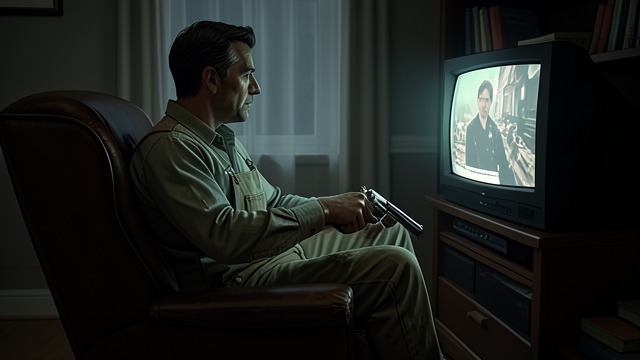
K. William Hodges spends his weekdays in a La-Z-Boy, watching combative daytime television and keeping his father’s revolver beside him. He has retired after forty years on the police force, but the ceremony and party have not given him a life to replace the work. His marriage has ended, his daughter lives far away, and his old cases replay in the long empty hours.
His attention to the gun has become a private ritual. K. William Hodges handles it and sometimes imagines what it would feel like to put it in his mouth. The thoughts are not yet a plan, but they show how deeply retirement has narrowed his sense of the future.
An unexpected interruption
The routine breaks when K. William Hodges receives an anonymous letter from a man claiming to be the Mercedes Killer. Its taunting account of the City Center killings is designed to make the former detective feel useless and provoke him into suicide. Instead, the letter gives K. William Hodges something he has been missing: a reason to focus beyond himself.
He recognizes that the letter contains details withheld from the press, including the killer’s use of a hairnet and bleach. The claim is no longer an empty boast. The unanswered case has become immediate again, and the possibility of catching its perpetrator starts to displace the revolver from his thoughts.
The Anonymous Challenge
The Letter Becomes a Lead
Reading the message as evidence
K. William Hodges initially considers turning the letter over to Pete Huntley and Isabelle Jaynes, the detectives who inherited the City Center case. He anticipates that the police will convene a broad meeting, leak the letter to reporters, and give the killer the renewed publicity he appears to crave. That calculation makes K. William Hodges hesitate, even though withholding evidence places him outside the law.
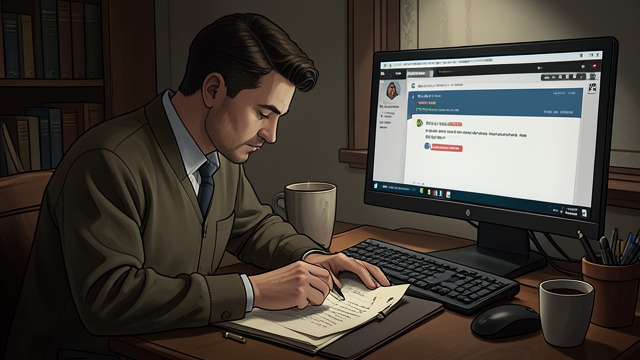
Instead, he studies the letter himself, separating deliberate stylistic disguises from details that may identify its writer. The repeated confusion of “perp” and “perk” catches his attention as a possible genuine verbal fingerprint. The exercise revives his investigative instincts and convinces him that the anonymous writer has left something usable behind.
A new working purpose
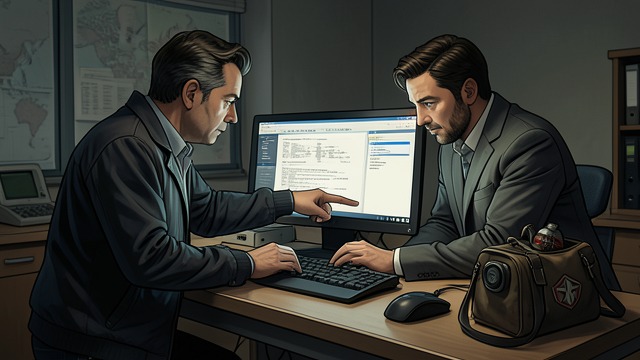
K. William Hodges follows the letter’s invitation to the supposedly private chat site Under Debbie’s Blue Umbrella, but he first asks Jerome Robinson to investigate the site’s security. The computer expert explains that the site protects conversations and that a username supplied by the killer could be a direct channel to him.
That channel changes the former detective’s days. Rather than returning to the television and gun, K. William Hodges begins making notes, testing hypotheses, and planning what to say. He decides he must “wind him up”: the exchange will be a contest of patience, with the killer drawn into revealing more than he intends.
The Case Reopens

From Retired Detective to Investigator
A client and a hidden letter
At DeMasio’s Italian Ristorante, K. William Hodges asks Pete Huntley about the unsolved City Center case, while concealing that the anonymous letter has already revived his interest. He soon meets Janelle Patterson, who has found a second letter hidden among Olivia Trelawney’s papers. It admits to stealing the Mercedes and places the killer in contact with Olivia after the massacre.
Janelle Patterson wants to know who drove her sister to suicide. K. William Hodges accepts the work, though he has no detective’s license and knows that his decision to keep the letters from the police may be a crime. The case now has both a practical lead and a personal complication: the dead woman’s family has entrusted him with a truth the police never uncovered.
Reconsidering an old failure
At Sunny Acres, Elizabeth Wharton remembers that Olivia Trelawney had a computer pen-pal named Frankie, who encouraged her to stop taking medication. The old woman also insists that Olivia never left her car key in the ignition. K. William Hodges begins to doubt the conclusion he and Pete Huntley had accepted, recognizing that their dislike of Olivia may have made her easier to dismiss.
The reconsideration deepens when Jerome Robinson explains how a thief could capture a car’s keyless-entry signal and later enter a locked vehicle. The Mercedes may not have been left carelessly accessible at all. For K. William Hodges, the old investigation is no longer simply dormant; its central assumption may have been wrong from the beginning.
A Dangerous Private Pursuit
Evidence Beyond the Badge
Following the digital trail
K. William Hodges and Jerome Robinson examine Olivia Trelawney’s computer, looking for the mechanism behind the sounds she described as ghosts. With Holly Gibney’s computer knowledge, they find a concealed audio program and a remote-access tool that could let someone observe and manipulate the computer from elsewhere.
The files suggest that the killer had more access to Olivia’s life than a single anonymous letter would imply. But there is no service card or clear record identifying the technician who worked on her machine. K. William Hodges must move from a digital clue to a person, and he cannot rely openly on the police databases and colleagues available to an active detective.
The investigation turns personal
K. William Hodges’s private inquiries make him increasingly visible. Brady Hartsfield has already watched him and noticed his contact with Jerome Robinson. When a bomb planted in K. William Hodges’s Toyota kills Janelle Patterson instead, the investigation becomes a pursuit shaped by grief and responsibility, not only professional curiosity.
K. William Hodges gives the police a misleading account and conceals how much he knows, buying time to follow his own lead. He understands that this risks his former partner’s trust and may expose Jerome Robinson and Holly Gibney to danger. Yet the killer’s attack confirms that the case is active and that K. William Hodges’s renewed purpose has put him directly in the killer’s sights.
A Life Reclaimed at a Cost
Pursuit to Its Breaking Point
The final chase
After identifying Brady Hartsfield through the Cyber Patrol connection, K. William Hodges searches Brady Hartsfield’s house with Jerome Robinson and Holly Gibney. The group finds a dismantled suicide vest and evidence of a new attack, but a ticket on Brady Hartsfield’s computer points first toward the wrong event. They eventually realize that the immediate target is the ’Round Here concert at Mingo Auditorium.
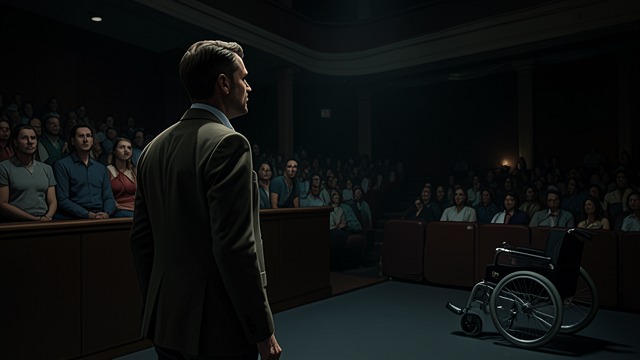
At the auditorium, K. William Hodges is too ill to enter the crowd himself. He sends Holly Gibney and Jerome Robinson toward the audience while trying to manage the emergency from backstage. Holly Gibney reaches Brady Hartsfield in his wheelchair and knocks him unconscious with the Happy Slapper; Jerome Robinson helps disable the trigger before the bomb can detonate.
Survival and consequence
The crowd is saved, but K. William Hodges suffers a heart attack and wakes in the hospital. Pete Huntley tells him that Brady Hartsfield is in a deep coma. The case has ended in a rescue, yet the pursuit has cost Janelle Patterson her life and brought K. William Hodges close to death.
K. William Hodges later returns to a quieter life with Jerome Robinson and Holly Gibney, working as a skip-tracer rather than a police detective. His renewed purpose remains, but the ending does not make his choices harmless or erase his grief. He can take satisfaction in the people saved while continuing to carry the loss of the woman who helped restore his connection to the world.
April 2010, six months after retirement
The day after the letter arrives
The following days in late spring 2010
Late spring 2010, after the family interviews
June 3, 2010, the night of the Mingo concert
